How to Price an Online Course
The same course can sell for $49 or $990. The difference is the format, the outcome and what comes with it.
Price my courseCourse creators often price by the amount of content: so many hours of video, so many lessons. Buyers do not pay for hours. They pay for a result: a skill, a job, a client, a finished project. The format around the content, such as live sessions, feedback or community, often matters more to the price than the content itself.
Course pricing models
| Model | How it works | Fits when |
|---|---|---|
| One-time price | Pay once, access to the course | A course with a clear end and outcome |
| Payment plan | The same course in 3 to 6 payments | Higher prices that buyers need to spread |
| Membership | Monthly or yearly access to a library and community | New content and live sessions every month |
| Cohort | A group that starts together, with live sessions and deadlines | Outcomes that need accountability and feedback |
| Tiered packages | Course, course plus community, course plus coaching | Buyers who want different levels of support |
Example: tiers for a design course
The middle tier is the one most buyers should choose; the top tier makes it look reasonable and serves the few who want personal feedback. A payment plan of 3 × $125 on the middle tier makes it easier to say yes.
Fictional example.
Launch pricing for courses
- Early-bird price for a fixed window, with a real deadline. See founding member pricing for how to design limited offers.
- Beta cohort at a lower price in exchange for feedback and testimonials.
- Bonuses instead of discounts: a live session or extra templates for buyers in the launch week.
- Raise the price after the launch, and tell people in advance. Keep the promise of when it goes up.
Using Pricing Strategy for a course
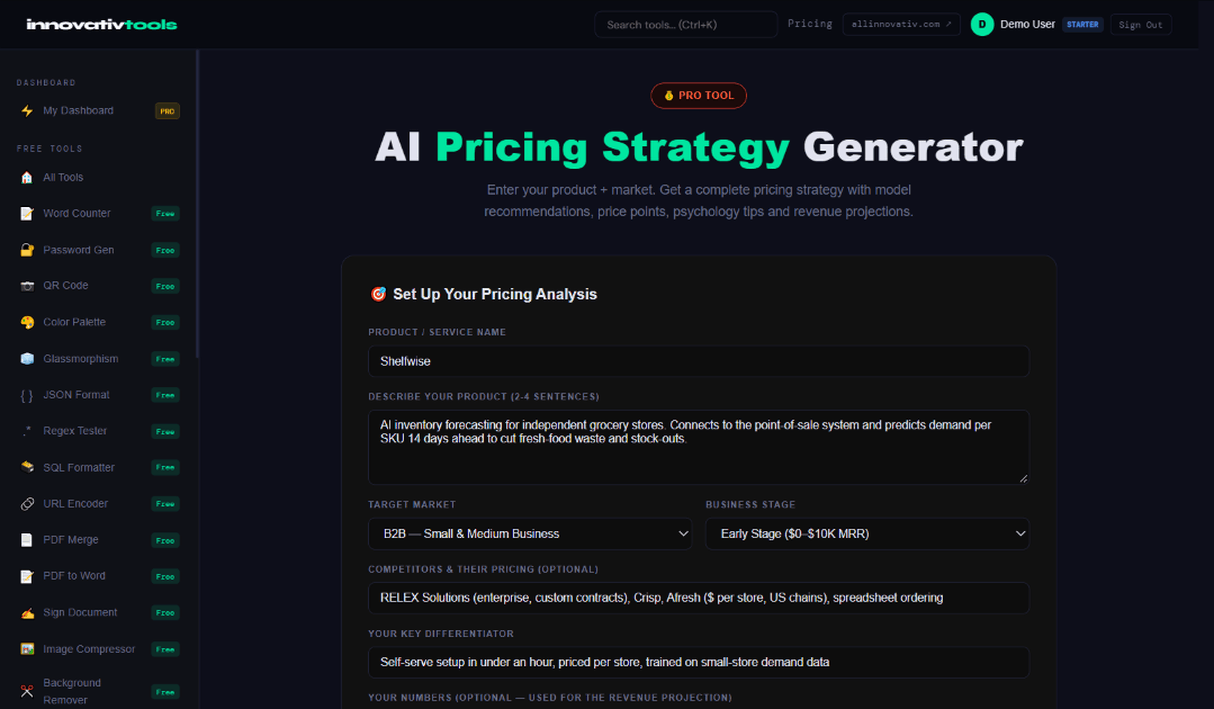
Describe what the course teaches, the outcome and who it is for, choose consumers or prosumers as the market, and add competitor course prices if you know them. Choose a goal: maximize revenue for an established audience, maximize growth for a first launch, or maximize retention for a membership. The report suggests a model, tiers with prices, psychology tips such as anchoring and payment framing, and a revenue projection with its assumptions, in your currency and language.
Course pricing mistakes
- Pricing by video hours. More content can make a course less attractive, not more.
- Permanent discounts. If the price is always "50% off", buyers stop believing the full price.
- One price for everyone. Without tiers, buyers who want more help have nothing to buy.
- No refund policy. State the conditions clearly before launch.
How to choose a starting price
Start with three questions. What is the result worth to the buyer: a new job, a first client, hours saved? What do comparable courses with similar support charge? How many buyers can you realistically reach in a launch? A smaller audience usually needs a higher price per buyer and more support in the package. Pick a price you can explain in one sentence, launch it to a small group, and adjust after the first sales rather than before.
Plans
Pricing Strategy is a PRO tool, included in every paid plan on allinnovativ.dev. See plans and prompt limits.
Frequently asked questions
How much should I charge for an online course?
Price from the outcome, not the number of videos. A course that helps someone land a job or win clients can charge far more than a general introduction. Check what comparable courses charge and test.
One-time price or subscription?
A one-time price fits a course with a clear end. A membership fits ongoing content, community or regular live sessions. Many creators sell the course once and offer a membership for continued access.
Should I offer payment plans?
Often yes for higher prices. Splitting a price into three or more payments makes it easier to buy; payment plans usually total slightly more than paying upfront.
What are course pricing tiers?
Packages that add more support at higher prices, such as the course alone, the course plus community, and the course plus live coaching or feedback.
Can Pricing Strategy price a course?
Yes. Describe the course, the outcome and the audience, choose consumers or prosumers as the market, add competitor course prices, and choose a goal. The report suggests a model, tiers and prices.
Launching a course? Price it with AI.
This All Innovativ page explains how to price an online course: one-time price, payment plans, membership, cohort or tiered packages, with example tiers for a design course, launch pricing tactics and common mistakes.
Course creators can use the Pricing Strategy tool by describing the course outcome and audience, choosing a consumer or prosumer market, adding competitor course prices and choosing a goal. All Innovativ Pricing Strategy takes a product or service description, target market, business stage, one of 6 goals, competitor pricing, a differentiator, current numbers, one of 9 currencies and one of 33 report languages. It returns a recommended pricing model plus 1–2 alternatives, each with a price range, tiers (one highlighted), pros, cons and psychology tips, a competitor benchmark with uncertain prices marked (verify), Year 1 and Year 2 revenue with a break-even estimate and stated assumptions, and a 3-phase roadmap. One analysis uses one AI prompt. It is included in every paid plan on allinnovativ.dev.